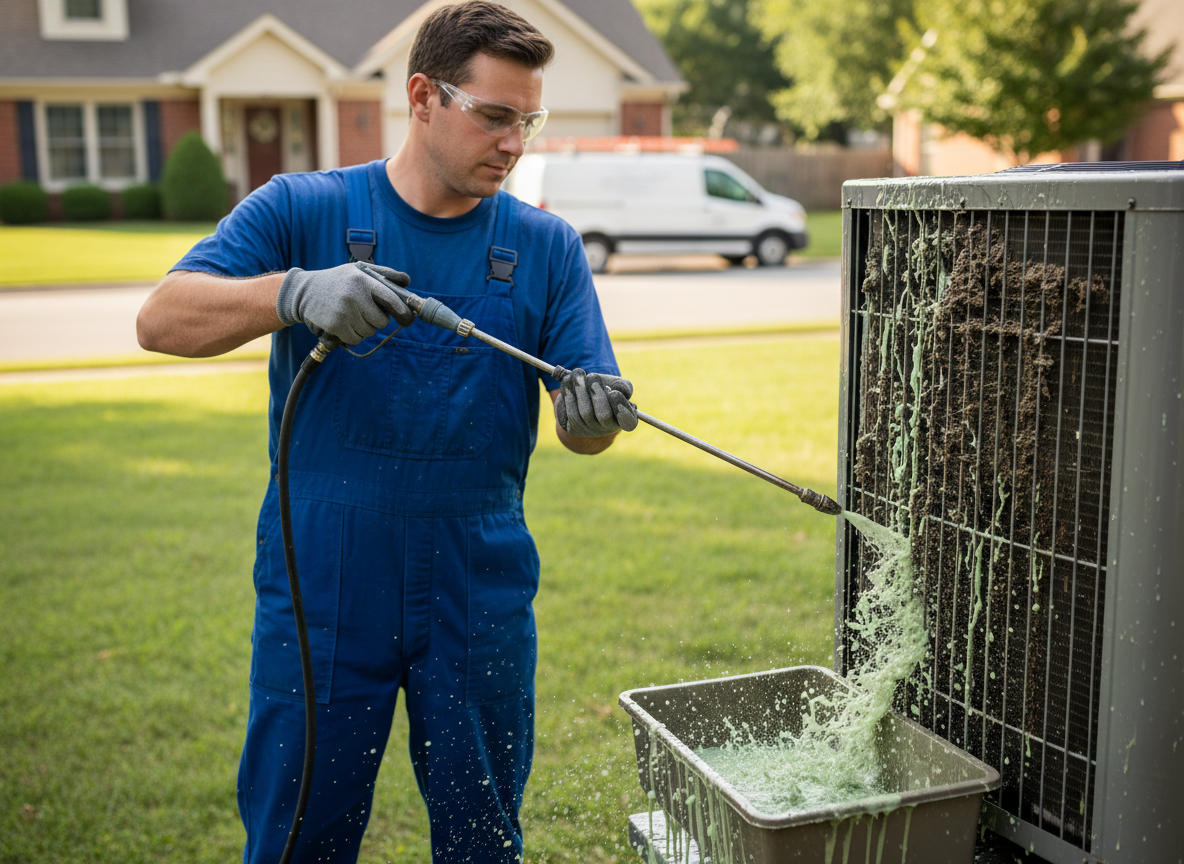
Coil cleaning hvac targets the evaporator and condenser coils where Montgomery's humidity drives rapid mold and biofilm growth. Homes near Court Square Plaza and older neighborhoods often have systems installed decades ago with fins packed by pollen and construction dust from surrounding areas. Technicians use non-acidic foaming agents and soft-bristle brushes to reach between tightly spaced fins without bending them, then rinse with low-pressure water to avoid damaging the drain pan or nearby electrical components.
In Montgomery the red clay soil and frequent summer storms push extra moisture into crawl spaces and attics, so coils in these locations collect standing water that breeds bacteria. Proper cleaning includes checking the condensate line for clogs common in the area's older ductwork and verifying that the drain pan slopes correctly to prevent overflow onto ceilings. Skipping this step in local humidity leads to musty odors that travel through the entire supply system.
After mechanical cleaning, a sanitizer rated for HVAC use is applied to inhibit regrowth on aluminum fins. Technicians also inspect the blower motor and filter rack because restricted airflow from dirty coils forces the motor to run longer in Montgomery's long cooling season. The process ends with a static pressure check to confirm improved airflow before the system is returned to normal operation.
Technician insight
In Montgomery, the thing that catches most people out with coil cleaning hvac is how quickly the high summer humidity packs red-clay dust and pollen into fins on systems in older Court Square homes, turning a simple cleaning into a multi-hour job when the drain line is already clogged.
Clogged Coils in Court Square Home
A Montgomery homeowner noticed weak airflow and musty smells from vents during peak humidity. Inspection revealed heavy biofilm on the evaporator coil and a blocked condensate line common in the area's older homes. We applied foam cleaner, brushed the fins, cleared the line, and sanitized the coil. Airflow returned to normal and the odor disappeared.
How it works
- 1
System Inspection
Technicians examine coil condition, fin spacing, and drain pan integrity while noting any visible mold or debris buildup.
- 2
Coil Access and Protection
Panels are removed and nearby electrical components are covered before cleaning begins.
- 3
Foam Application and Agitation
Non-acidic cleaner is applied and allowed to dwell, then fins are gently brushed to loosen embedded dirt.
- 4
Rinse and Sanitize
Low-pressure rinse clears residue followed by an HVAC-safe sanitizer to slow future growth.
- 5
Reassembly and Testing
System is reassembled and airflow is verified with a static pressure reading before departure.
Pricing
Cost varies by system access, coil condition, and number of units; upfront quotes provided after inspection.