Montgomery homes built before 1980 often feature narrow metal duct runs tucked into crawl spaces or attics that collect dust and pollen year-round. High summer humidity combined with winter heating cycles causes condensation inside the ducts, leading to sticky buildup that restricts airflow and forces HVAC systems to work harder. Ever Revive Tech technicians start by mapping the full duct layout from the Court Square Plaza base before any equipment enters the home, preventing missed branches that commonly trap debris in older Montgomery neighborhoods.
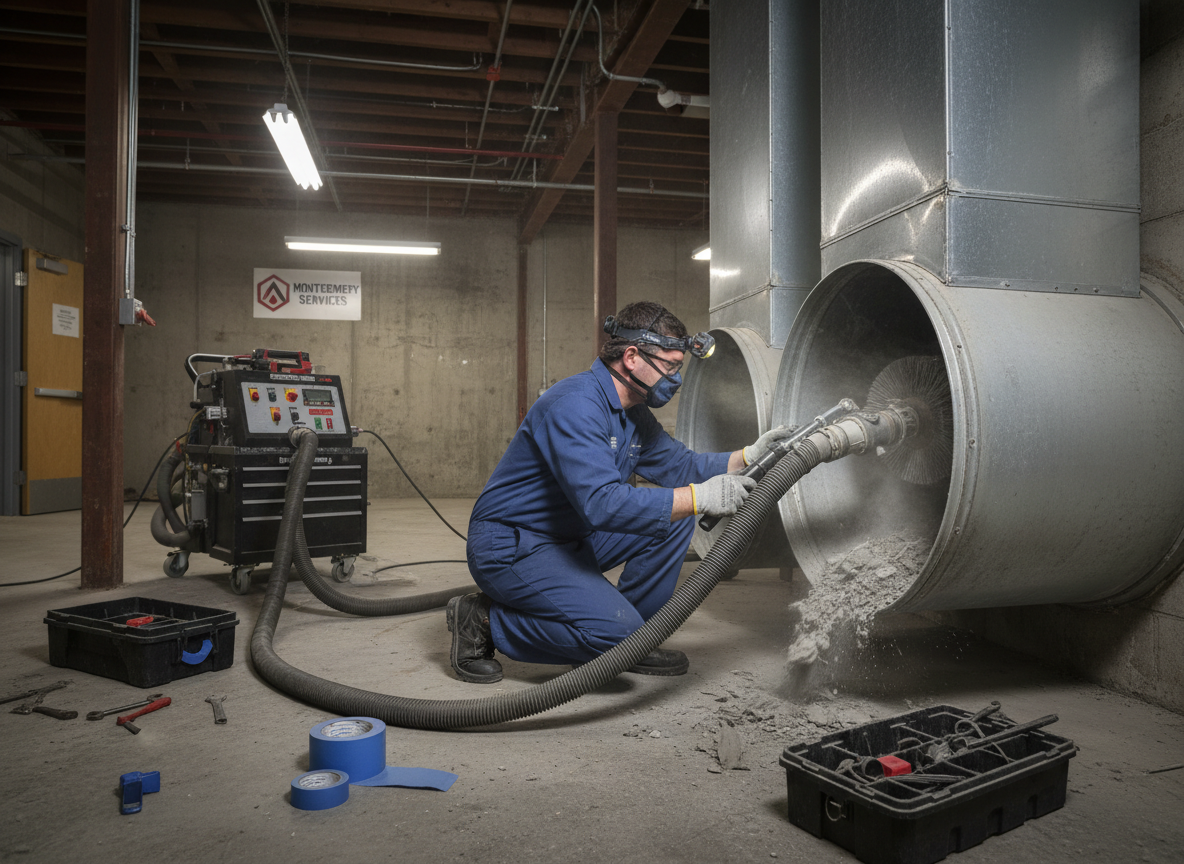
Access panels must be cut carefully in finished ceilings or walls to reach trunk lines without damaging plaster or drywall common in 1950s-1970s Montgomery construction. Negative-air machines are positioned to pull debris outward rather than pushing it into living spaces, a step that matters when ducts run near finished basements or laundry rooms. After agitation with rotating brushes sized for each duct diameter, HEPA-filtered vacuums remove loosened material while technicians check for disconnected joints that allow conditioned air to leak into attics.
Final verification includes airflow measurements at supply registers before and after service to confirm improved performance. Homeowners receive a written summary noting any damaged flex duct or insulation gaps found during the job so repairs can be scheduled separately. This approach keeps the focus on measurable results rather than sales pitches for unrelated add-ons.
Seasonal Considerations for Montgomery Duct Cleaning
Montgomery's long humid season means spring and fall are ideal windows for HVAC duct cleaning before heavy cooling or heating loads begin. Pollen from surrounding pine and oak areas increases in spring, while winter heating can bake dust onto duct walls if systems run constantly during cold snaps.
Technician insight
In Montgomery, the thing that catches most people out with HVAC duct cleaning is the combination of older plaster homes around Court Square and high year-round humidity that packs fine red-clay dust into flex runs near the attic. Homeowners often seal off only the obvious vents and miss how that forces debris deeper into the trunk lines when the system restarts.
Hidden Flex Duct in 1960s Montgomery Home
A Montgomery homeowner noticed weak airflow from several ceiling registers during summer. Inspection revealed a collapsed flex duct section running through the attic that had collected years of pollen and insulation fibers. Technicians isolated the run, removed the collapsed section, cleaned the remaining rigid duct, and restored full airflow without cutting into finished ceilings.
How it works
- 1
Initial Inspection
Technicians examine accessible duct sections, registers, and the HVAC unit from the Montgomery service location to identify buildup and access points.
- 2
System Isolation
Registers are sealed and the system is prepared for negative pressure to contain debris during cleaning.
- 3
Mechanical Agitation and Extraction
Rotating brushes and compressed air tools loosen material while HEPA vacuums pull it out of the ductwork.
- 4
Post-Cleaning Verification
Airflow is rechecked at multiple points and the system is returned to normal operation with a summary of findings.
Pricing
Cost depends on square footage, number of HVAC systems, and how much access is needed in finished spaces.