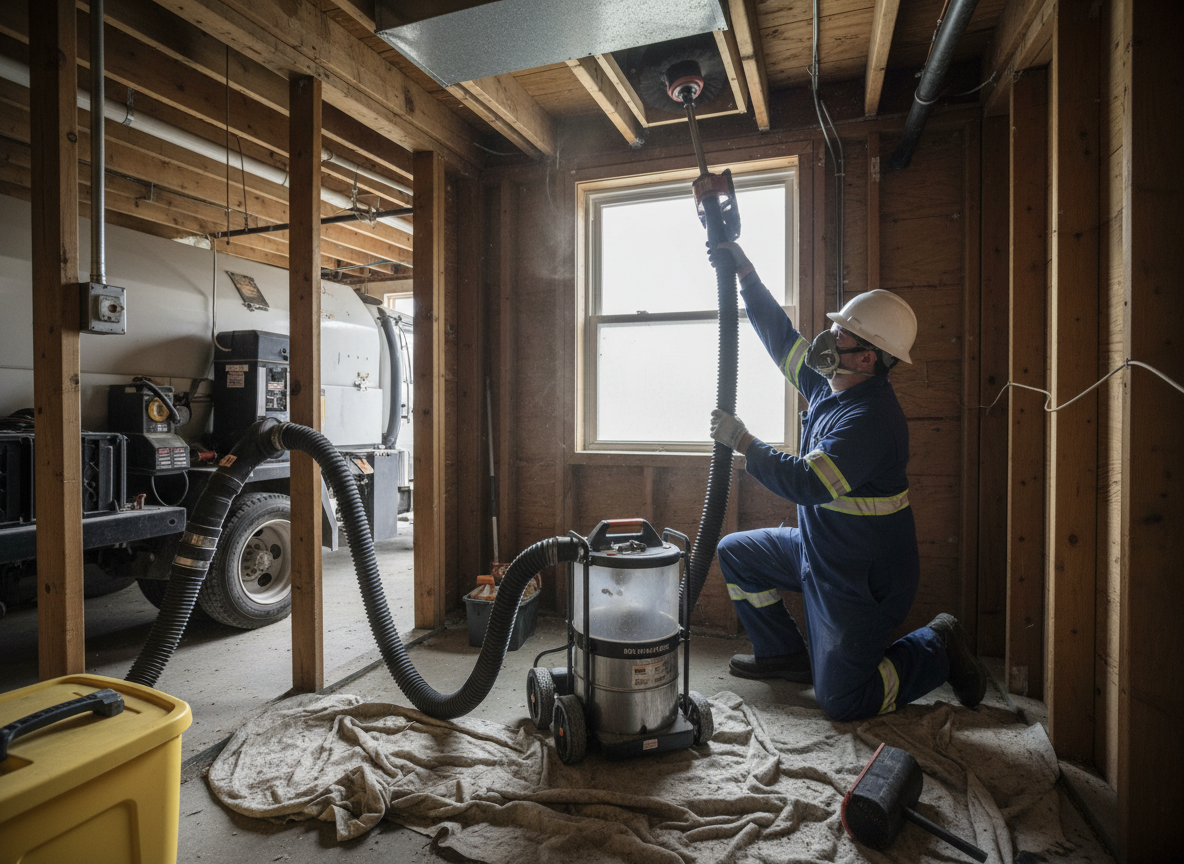
Montgomery homes built from the 1950s through the 1980s often feature flexible duct runs and older sheet-metal trunks that trap fine red-clay dust pulled in from surrounding yards. When these systems run continuously during humid summers, the buildup restricts airflow and forces the HVAC to work harder. We use negative-air machines with HEPA filtration to pull debris without spreading it into living spaces, and we always check for disconnected or crushed flex lines that are common in crawl spaces here.
Sudden cold fronts in winter can cause rapid temperature swings that loosen accumulated lint inside return ducts. Homeowners sometimes notice musty odors only after the first furnace cycle of the season. Our 24/7 crews carry portable lighting and inspection cameras so we can locate these deposits even in tight attics above single-story ranches common in the Capitol Heights and South Montgomery neighborhoods. We remove the material rather than simply dislodging it downstream.
Pollen from nearby pine stands and river lowlands adds another layer of fine particulate that standard filters miss. We pay special attention to the main trunk near the air handler, where most of this material settles. Every job includes a post-clean visual check of supply registers to confirm nothing was left behind before we restore power to the system.
Technician insight
In Montgomery, the thing that catches most people out with 24/7 Air Duct Cleaning is how quickly pine pollen and red clay dust pack into the main return trunk during our long, humid summers; older flex duct in crawl spaces under 1970s homes often collapses if you push too hard, so we always start with a camera check before any agitation.
Odor After First Cold Snap
A homeowner in South Montgomery noticed a musty smell the morning after temperatures dropped. We found compacted dust and pollen in the main return trunk feeding a 1980s air handler. Negative-air extraction cleared the line and we re-sealed a loose joint near the crawl space entrance. The odor disappeared and airflow improved immediately.
How it works
- 1
Initial Assessment
We arrive at the property, review HVAC layout, and note any access limitations in attics or crawl spaces typical of Montgomery homes.
- 2
System Isolation
Registers and returns are sealed, and the air handler is isolated to prevent cross-contamination during cleaning.
- 3
Negative-Air Extraction
HEPA-equipped equipment pulls debris through the ducts while brushes and compressed air dislodge buildup from inside the lines.
- 4
Final Inspection and Restart
We verify clean ducts with a camera sweep, remove seals, and confirm proper system operation before leaving.
Pricing
Cost varies by square footage, number of HVAC zones, and duct accessibility; we provide upfront quotes after the initial assessment.