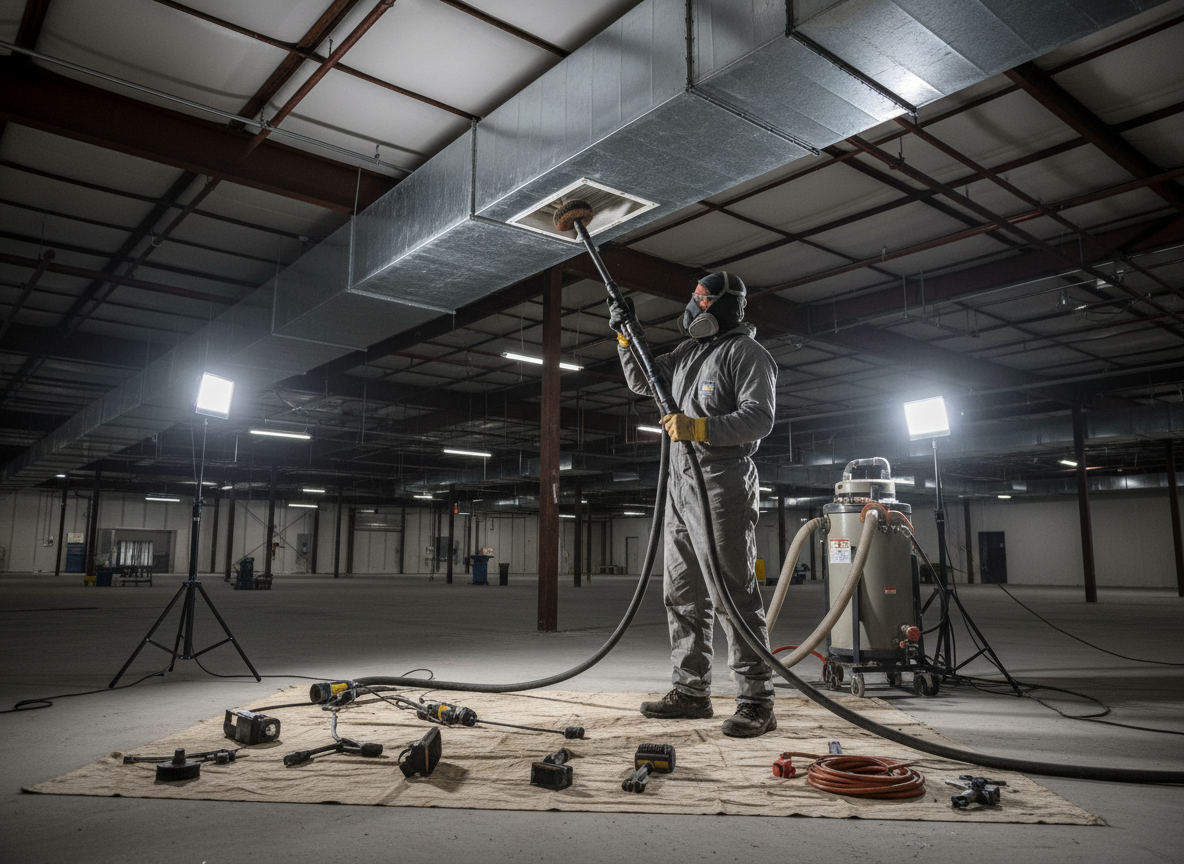
Commercial properties in Montgomery often feature older HVAC trunk lines running through drop ceilings and crawl spaces that accumulate construction dust, insulation fibers and pollen from the surrounding Alabama River valley. These systems run longer hours than residential setups, so restricted airflow shows up first as uneven temperatures across floors and higher energy use during peak summer humidity. Technicians must map each branch before cleaning to avoid disturbing fire dampers or low-voltage controls common in downtown office stock.
Access points in retail spaces near Court Square Plaza frequently sit behind locked utility rooms or above tenant improvements added over decades. Negative-pressure equipment is required to keep loosened debris from migrating into occupied suites, and crews carry HEPA filtration to handle the fine particulates released from older fiberglass-lined ducts. Post-clean verification includes static pressure readings at the air handler to confirm restored flow without altering original system balance.
Seasonal pollen loads and occasional flooding near low-lying commercial blocks increase the need for regular coil and drain pan attention during duct work. Skipping these steps can reintroduce moisture into the system, leading to musty odors that travel through return plenums. Ever Revive Tech schedules after-hours visits to minimize disruption while documenting every section cleaned for building management records.
Technician insight
In Montgomery, the thing that catches most people out with Commercial Air Duct Cleaning is the mix of historic downtown buildings and newer retail fit-outs around Court Square Plaza. Older trunk lines often run through tight chases with no access doors, and the summer humidity pushes moisture into any unsealed sections we open.
Downtown Office Suite Duct Restoration
A second-floor office near Court Square Plaza reported weak airflow and visible dust on desks. Inspection showed collapsed flex runs and heavy lint in the main trunk from years of tenant renovations. We isolated the zone, extracted debris under negative pressure, replaced damaged flex sections and restored balanced flow.
How it works
- 1
Site Assessment
Walk the mechanical rooms and tenant spaces to locate all trunk lines, returns and access points while noting any dampers or controls.
- 2
Isolation and Containment
Set up negative-pressure zones and seal off occupied areas to prevent debris migration during agitation.
- 3
Agitation and Extraction
Use rotary brushes and compressed air tools to dislodge buildup, pulling material through HEPA-filtered collectors.
- 4
Final Verification
Measure static pressure at the handler and visually inspect cleaned sections before restoring full system operation.
Pricing
Pricing varies by square footage, number of zones and accessibility; upfront quotes provided after on-site assessment.