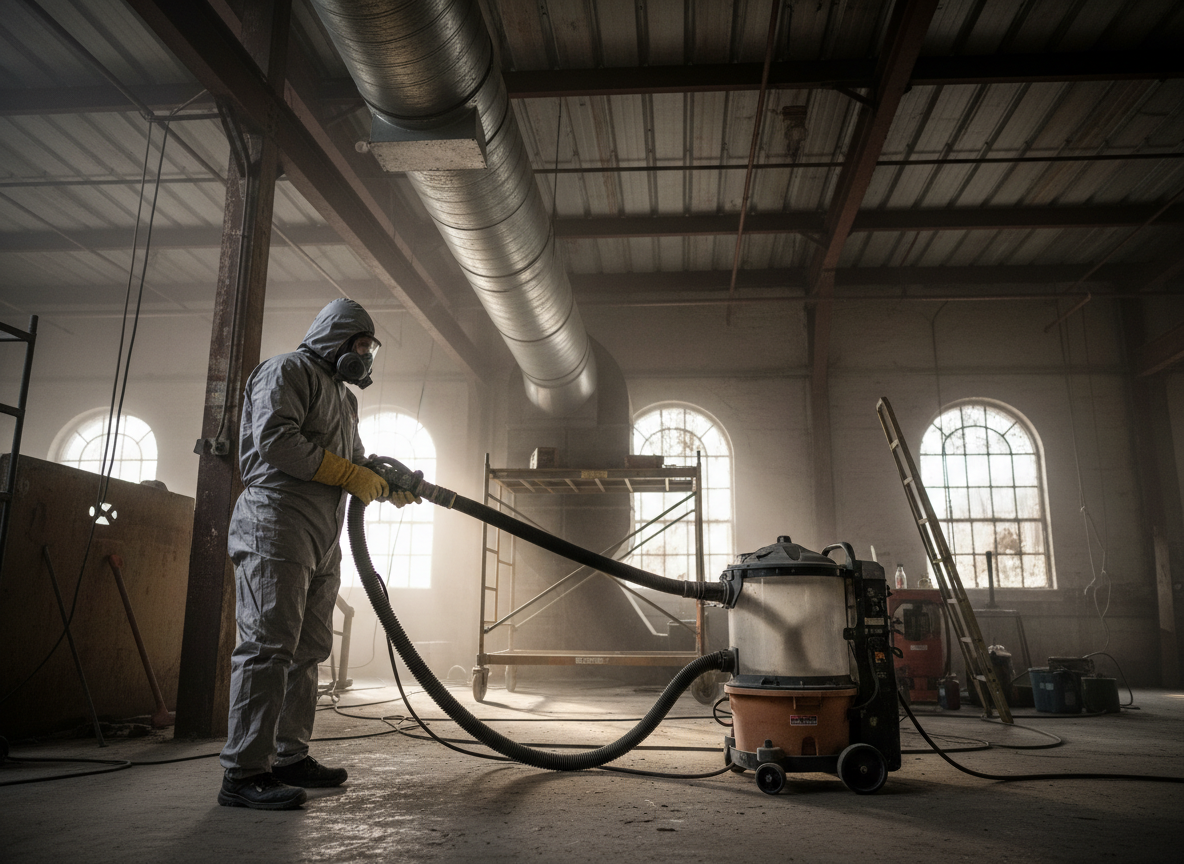
Industrial air duct systems in Montgomery buildings often run through older brick and concrete structures around Court Square Plaza and nearby commercial corridors. These setups accumulate heavy grease, dust, and manufacturing residues that standard residential tools cannot handle. Technicians must use high-static negative air machines and sectional rod systems to reach long horizontal runs without collapsing flexible connections. Access panels are frequently missing or sealed under layers of paint, requiring careful cutting that preserves fire-rated integrity.
Montgomery's mix of humid summers and occasional winter temperature swings accelerates corrosion on galvanized ductwork in unconditioned spaces like warehouses near the riverfront. Industrial jobs here regularly encounter oil mist from nearby machinery that binds to interior surfaces and reduces airflow by up to thirty percent over time. Proper containment is essential to prevent cross-contamination into adjacent office areas during cleaning.
Code requirements in the Montgomery area mandate that any disruption to smoke control or exhaust systems be documented and tested before return to service. Ever Revive Tech crews verify damper operation and seal integrity after each industrial project to avoid triggering inspection failures. Skipping these steps has caused facilities to face shutdowns during follow-up visits by local inspectors.
Technician insight
In Montgomery, the thing that catches most people out with industrial air duct cleaning is how quickly manufacturing residue cakes onto the top of horizontal runs in buildings over thirty years old around Court Square. Homeowners and facility managers assume a quick vacuum will suffice, but those layers require sectional rods and repeated passes or the system will clog again within months.
Warehouse Duct Blockage Near Court Square
A textile warehouse in Montgomery reported reduced exhaust on the second floor. Inspection showed compacted lint and machine oil blocking the main trunk above the production line. Crews set up negative air, ran rotary brushes through the full length, and cleared the obstruction. Airflow returned to design levels and the facility passed its next safety review.
How it works
- 1
Site Assessment
Inspect all accessible duct sections, note access points, and identify contamination sources specific to the industrial process.
- 2
Containment Setup
Install negative air machines and sealed barriers to isolate the work zone from occupied spaces.
- 3
Mechanical Cleaning
Use rotary brushes, compressed air whips, and HEPA vacuum collection to remove debris without damaging duct walls.
- 4
Verification and Restoration
Perform post-clean inspection, reinstall access panels, and confirm system operation meets original specifications.
Pricing
Industrial jobs are quoted after on-site assessment because duct length, height, and contamination level vary widely.